

Beyond the Work Triangle: Advanced Spatial Flow in Bespoke Kitchen Design
Design Summary: This guide by Nuovo Kitchens explores the evolution of kitchen ergonomics from the 1940s "Work Triangle" to modern Zone-Based Planning. Key concepts include multi-user functionality, professional-grade appliance integration (including heritage brands like Gaggenau, Miele, La Cornue, Smeg, Thermador, Sub-Zero), and the "Social Island" architectural model.
Kitchens are undeniably one of the most frequently used and cherished spaces in our homes. They not only bring a sense of warmth and comfort but also serve as a hub for family activities and gatherings. Today’s kitchen designs emphasize modern aesthetics and prioritize comfort. One key principle in functional kitchen design is the "work triangle." But what exactly is the kitchen work triangle, and why is it so essential? How can designing a new dream kitchen around this concept provide added benefits? Let’s dive into how this principle enhances comfort, functionality, and modern design in your kitchen.
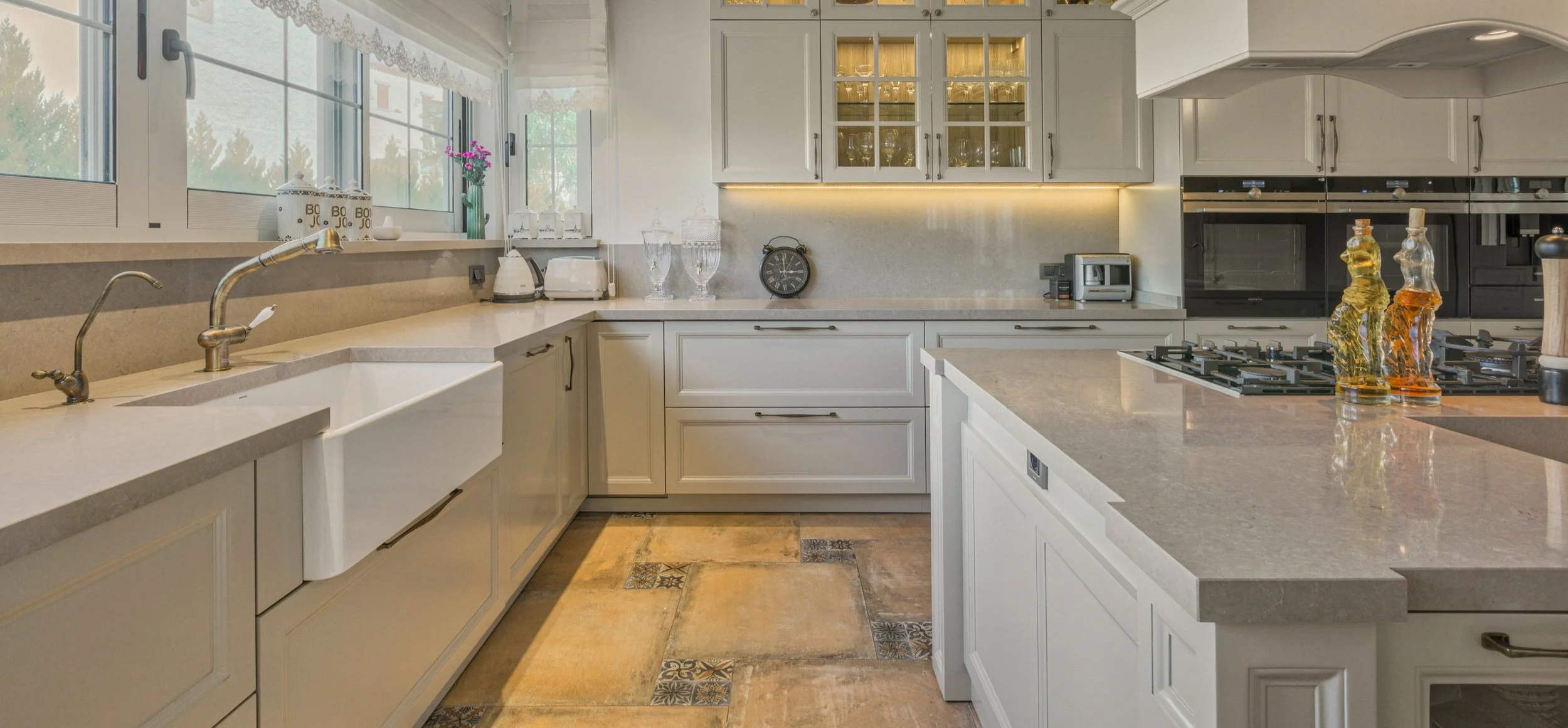
The more efficiently each area is organized, the more functional your kitchen will be.
What is the Kitchen Work Triangle?
While a kitchen’s design reflects the user’s preferences and needs, one rule remains constant: the work triangle. This concept refers to the imaginary triangle formed between the refrigerator, stove, and sink. If you’re hearing about this for the first time, you might wonder why it’s so crucial. Introduced in the 1940s, this idea emerged to optimize efficiency in kitchens filled with various appliances. Today, you’ll find the work triangle subtly integrated into most kitchen designs. Also known as the "golden triangle," this rule can be applied to U-shaped, L-shaped, parallel, island, and single-wall kitchens.
The Purpose of the Work Triangle
No matter the kitchen style, the work triangle ensures an efficient and comfortable working space. It helps create a seamless flow between the three most critical points in the kitchen—cooking, storage, and cleaning. The more conveniently these areas are organized, the more efficient your kitchen becomes.
The Four Pillars of Task Zoning
At Nuovo Kitchens, we move beyond basic layouts to create four high-performance zones, ensuring the kitchen functions as a professional-grade workspace and a social sanctuary.
The Culinary & Heat Zone
The Approach: Centering the layout around professional ranges, such as Gaggenau, Miele, or La Cornue, to create a definitive focal point.
The Detail: We utilize a "Centric Reach" philosophy. By prioritizing Point-of-Use storage—including integrated spice pull-outs and walnut-lined knife drawers positioned within 50cm of the cooktop—we minimize movement and maximize culinary efficiency.
The Preparation & Hydration Zone
The Approach: Utilizing oversized under-mount sinks paired with advanced water systems like Quooker boiling taps for instant functionality.
The Flow: We prioritize Biophilic Positioning, placing the primary prep station near natural light sources or garden views. This enhances the connection to the outdoors, promoting well-being during daily rituals.
The Refrigeration & Pantry Hub
The Approach: We specialize in fully integrated refrigeration, utilizing brands like Sub-Zero, Gaggenau and alike. By using custom-milled cabinetry panels that match your kitchen’s profile, we ensure large-scale appliances disappear into the room’s architecture for a clean, uninterrupted silhouette.
The Nuance: To maintain a high-performance workflow, we often utilize a Decoupled Cooling strategy. This involves separating the "Main Culinary Fridge" from a dedicated "Beverage or Wine Station." By placing the beverage center outside the primary cooking zone, guests can serve themselves without interrupting the chef’s path.
The Social & Service Zone
The Approach: Designing the kitchen island as a bespoke furniture piece rather than mere cabinetry. This zone acts as the bridge between the culinary workspace and the living area.
The Design: We implement Ergonomic Clearance standards, with seating overhangs calculated between 300mm and 400mm. This ensures that the island serves as a comfortable, long-term gathering point for guests rather than just a transient perch.
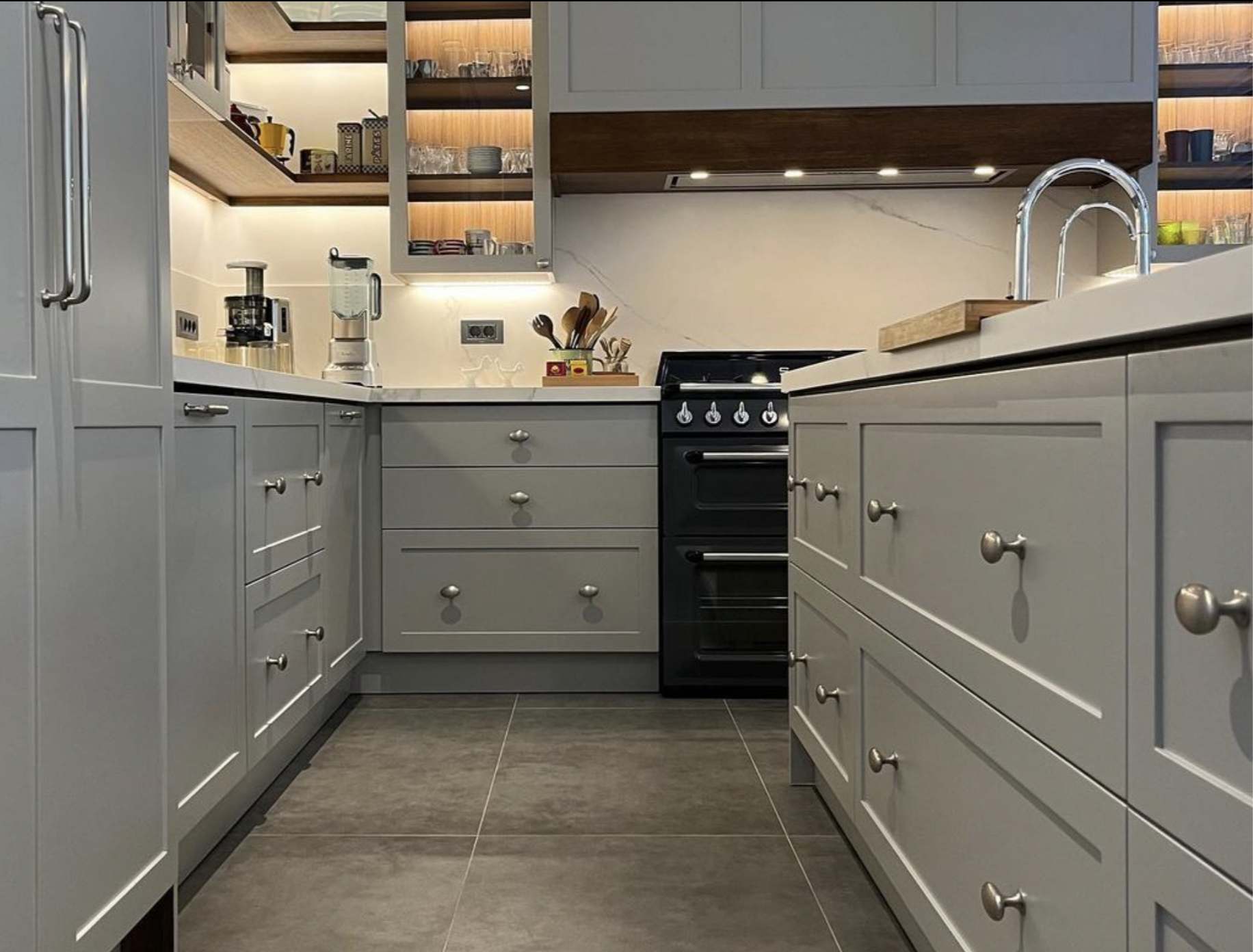
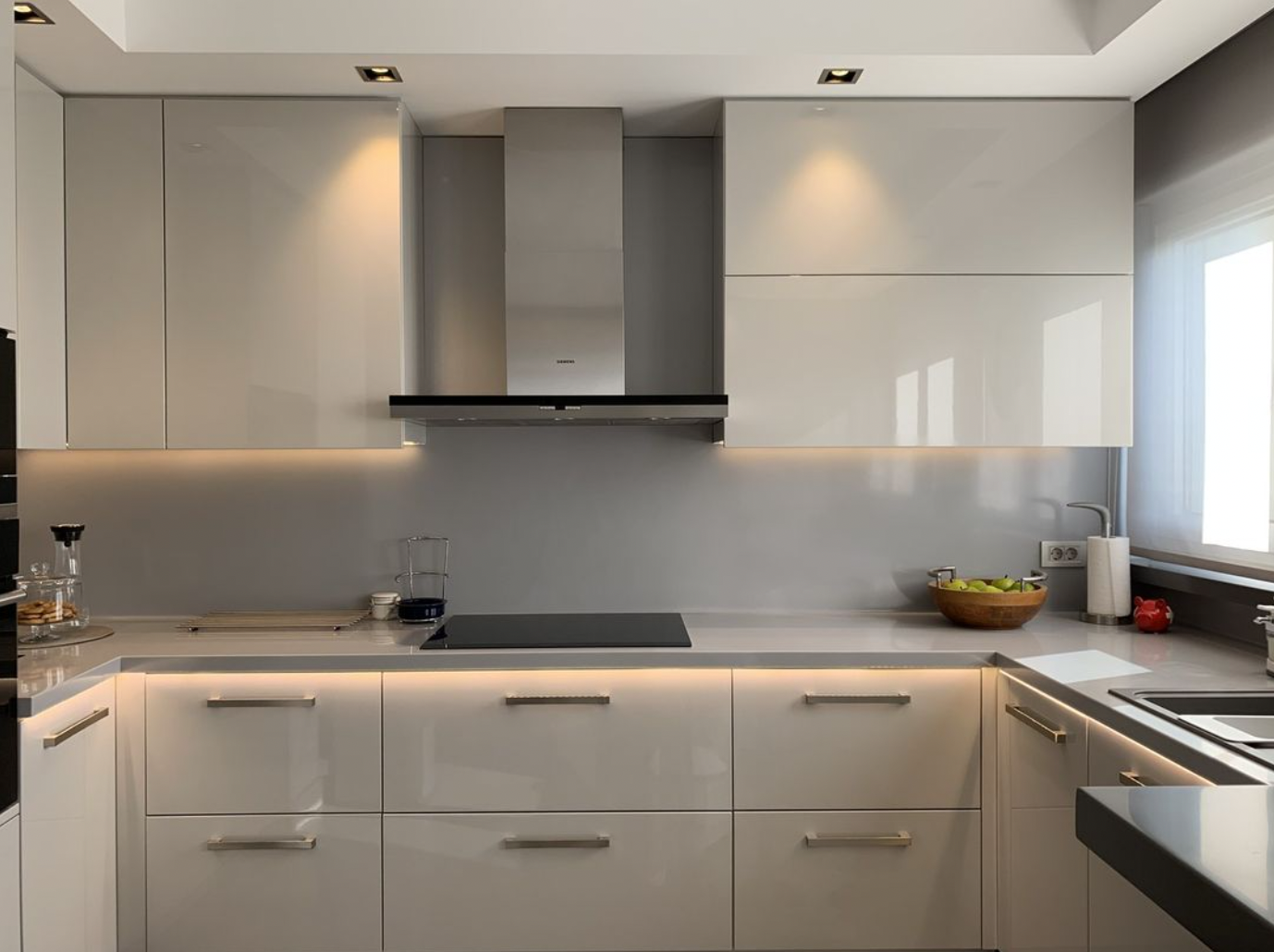
How the Work Triangle Functions in Island Kitchens
Modern kitchen designs, particularly island kitchens, have become increasingly popular in homes with larger spaces. An island kitchen typically features an L-shaped countertop with an additional cooking and dining area incorporated into the island. Depending on the user’s needs and available space, this layout can vary.
To ensure efficiency and ease of movement, the work triangle is still crucial in these kitchens. Here’s how it’s planned:
The triangle between the fridge, stove, and sink should ideally fit within an approximately 75 sq ft area for optimal efficiency.
Appliances and tasks that complement each other should be positioned side by side. For instance, the sink and dishwasher should be adjacent for easy use.
The kitchen layout should match the available space, with the island design chosen accordingly. The right island layout enhances the work triangle's benefits.
The most effective triangle design resembles an equilateral triangle, with the fridge, stove, and sink positioned at equal distances from each other.
Extra furniture like chairs or tables should not block the triangle's pathways to avoid reduced efficiency.
Traditional Flow vs. Nuovo Bespoke Planning
This comparison illustrates why a Nuovo kitchen provides a superior experience to standard renovations:
| Feature | Standard "Work Triangle" | Nuovo Bespoke Zone Planning |
|---|---|---|
| User Capacity | Designed for 1 primary cook | Optimized for 2+ cooks and guests |
| Appliance Layout | Linear 3-point connection | Multi-station (Main + Prep + Bar) |
| Workflow | Focus on speed/distance | Focus on ergonomics & social flow |
| Integration | Standard cabinet depths | Custom depths for zero-clearance appliances |
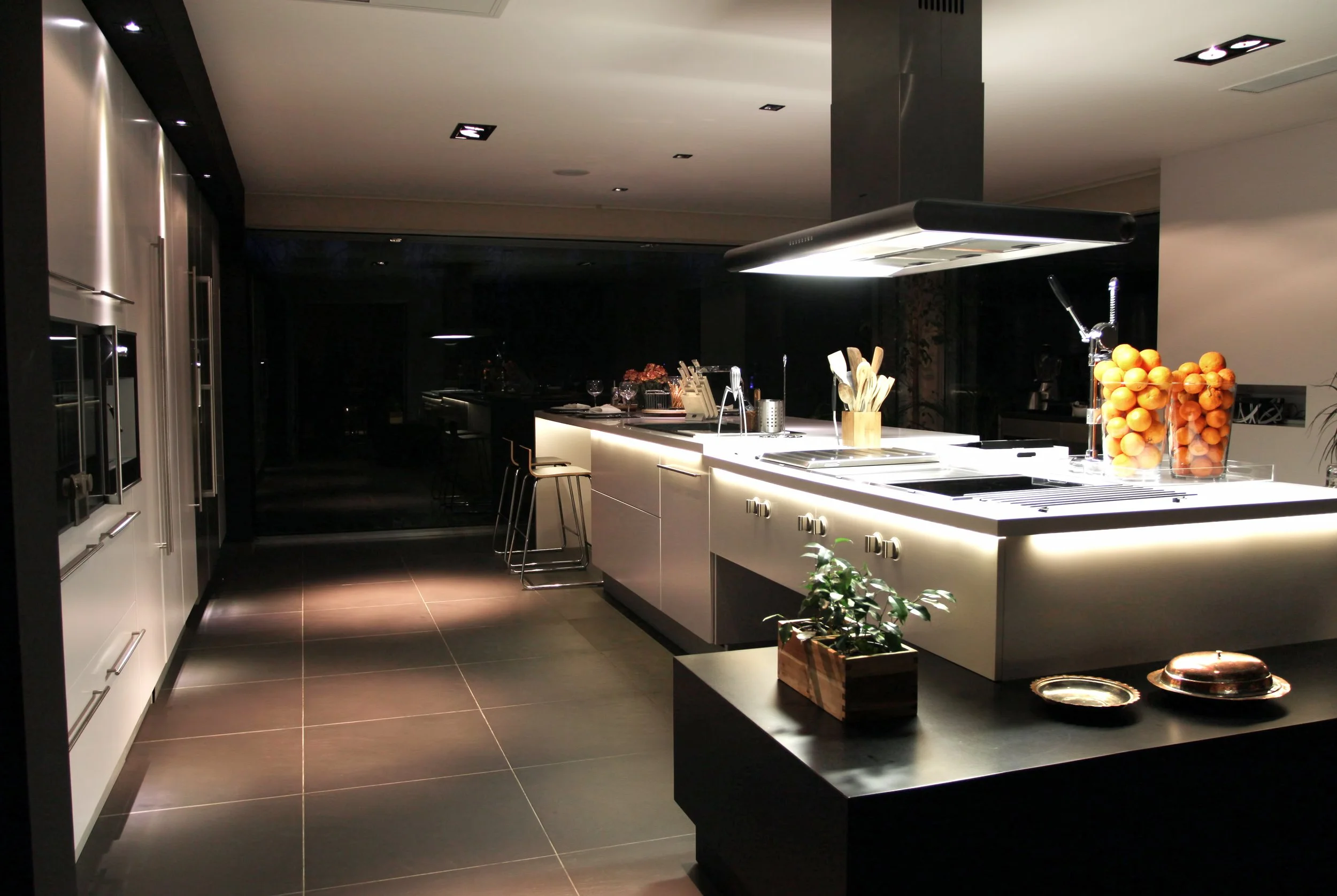
One of our completed projects: A stunning modern kitchen with a central island, featuring a thoughtfully designed cooking area where the stove, oven, refrigerator, and washing station are seamlessly connected, maximizing both comfort and functionality.
Key Considerations for the Work Triangle
Kitchens today are more than just spaces for cooking and cleaning. They’ve become gathering places for family and friends. As such, creating a comfortable and functional workspace is a priority, and the work triangle plays a crucial role in this. So, what should you keep in mind when designing a kitchen around the work triangle?
Storage Areas
In modern kitchens, storage solutions are often located near cooking spaces for easy access. For instance, dry food storage areas should be positioned near the stove, so everything you need is always within reach.
Under-Sink Storage
Under-sink storage is extremely practical. Cleaning supplies, the dishwasher, and recycling bins should be positioned close to the sink for easy access. This arrangement ensures a seamless flow between related tasks.
Preparation Area
The preparation area, where all the chopping and plating happen, is another vital aspect of the work triangle. By placing essential tools like knives and cutting boards near this zone, the kitchen becomes more functional. Cabinets and drawers around the prep area make it even easier to navigate.
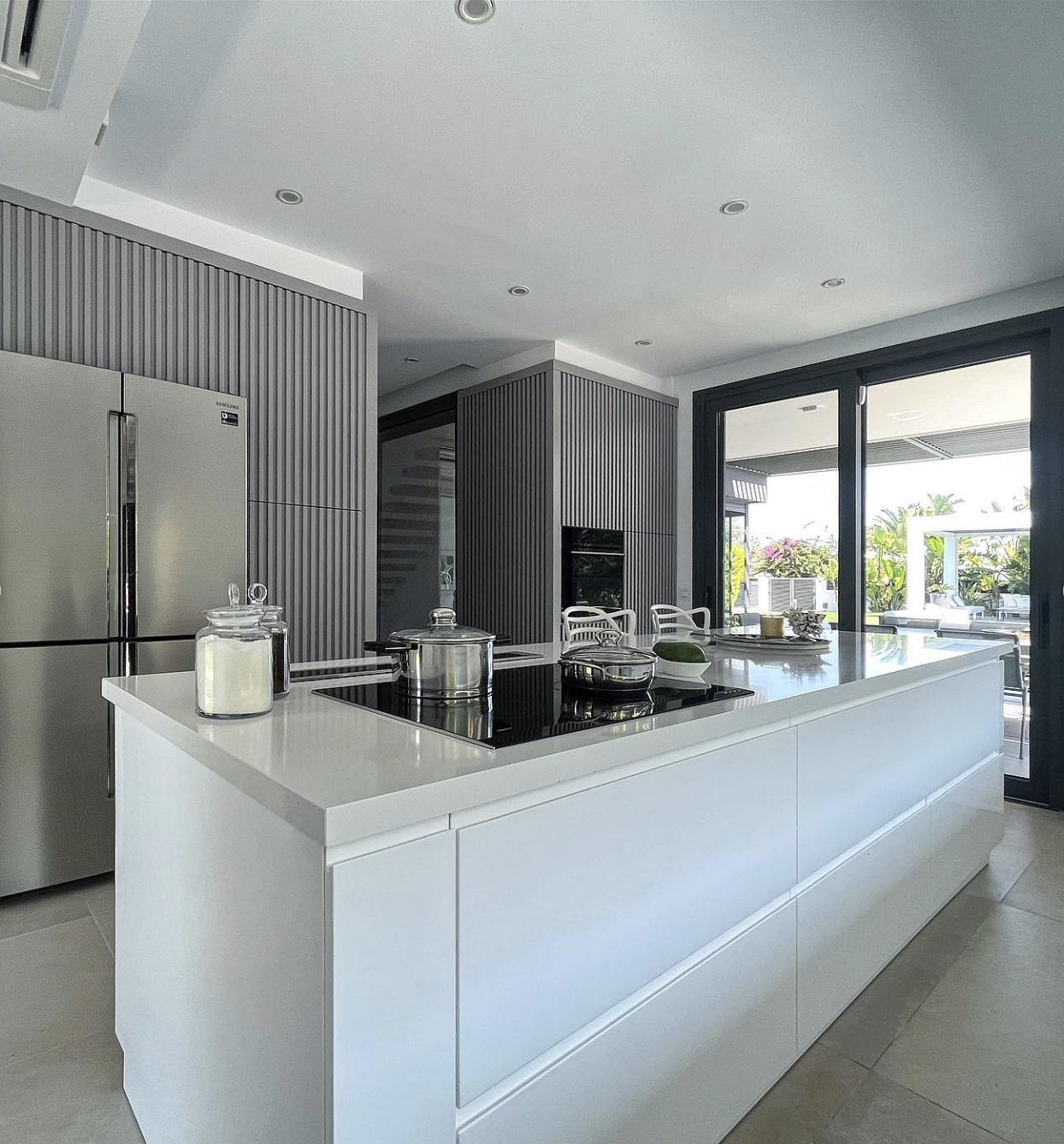
A well-sized and strategically positioned central kitchen island can be an excellent solution for creating a highly functional space for preparation, cooking, and dining.
Cooking Area
The cooking area, including the stove, microwave, and other appliances, should be organized with commonly used items within easy reach. This ensures efficiency while preparing meals.
Additional Zones
Modern kitchens often incorporate entertainment-focused items and appliances, particularly in homes where the kitchen serves as a shared family space. These features, however, should be positioned away from the work triangle to maintain its functionality. In homes with small children, this is especially important, as it helps keep cooking and cleaning areas separate from high-traffic zones.
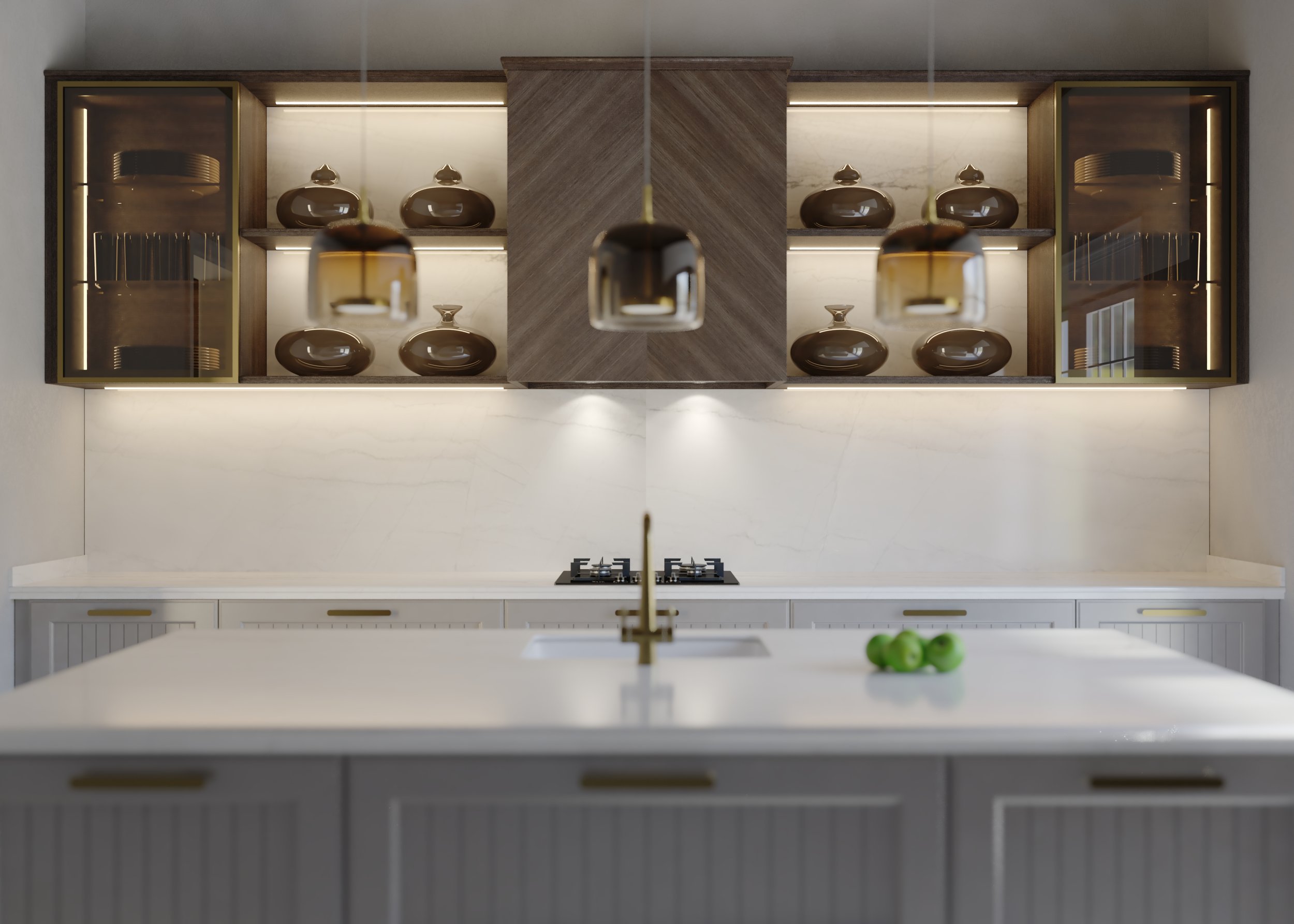
Designing the kitchen island as a bespoke furniture piece rather than mere cabinetry. This zone acts as the bridge between the culinary workspace and the living area.
Technical Specifications for Luxury Planning
When planning your renovation, consider these Nuovo Standards for a high-performance layout:
Walkway Clearance: We recommend a minimum of 1050mm (42") for single-cook areas and 1200mm (48") for shared social zones.
Island Proportions: For a statement island, we utilize book-matched stone slabs, often exceeding 3 meters to eliminate visible seams.
Smart Infrastructure: Every cabinet is pre-wired for integrated LED task lighting and hidden charging stations.
Is the Work Triangle Still Relevant?
While today’s families may have different needs, the kitchen work triangle remains an important principle for creating a functional space. Even if your kitchen requires a more customized layout, following the work triangle will make it easier to navigate and improve overall efficiency.
By incorporating the work triangle into your kitchen renovation, you create a space that balances comfort, functionality, and modern aesthetics. At Nuovo Renovations, we are committed to designing kitchens that blend innovative layouts with timeless design principles to enhance your daily experience. Let us help you create your dream kitchen!
Frequently Asked Questions
Does the kitchen work triangle still apply in open-concept homes?
In modern open-concept designs, the triangle often stretches. We adapt this by using "The Linear Work Path" approach, ensuring that even in large spaces, the distance between the prep sink and the range remains efficient.
What is the ideal distance between a kitchen island and the perimeter cabinets?
For a high-end feel, 1200mm is the ideal distance. It allows for two people to pass comfortably and provides ample clearance for the deep drawers of professional dishwashers like Miele or Fisher & Paykel.
How do you integrate smart appliances without ruining the aesthetic?
We specialize in "Invisible Integration." This involves using custom-milled furniture panels that match your cabinetry perfectly, hiding high-tech appliances behind hand-painted wood or book-matched timber.